
The highest level
of process organization
The highest level of process organization
of process organization
The mass adoption of large language models, commonly referred to as artificial intelligence, has literally shaken the software development market. Some see Claude and its peers as an opportunity for inexperienced programmers to join the creative process and free professionals from routine work, while others predict the complete displacement of newcomers by machine intelligence, or even the takeover of all humanity by it. Open-Source projects are sparking debates about whether it is acceptable to use neural networks for vulnerability discovery or code generation. Corporations explain large-scale staff reductions by transferring their work to the newly emerged miracle assistants.
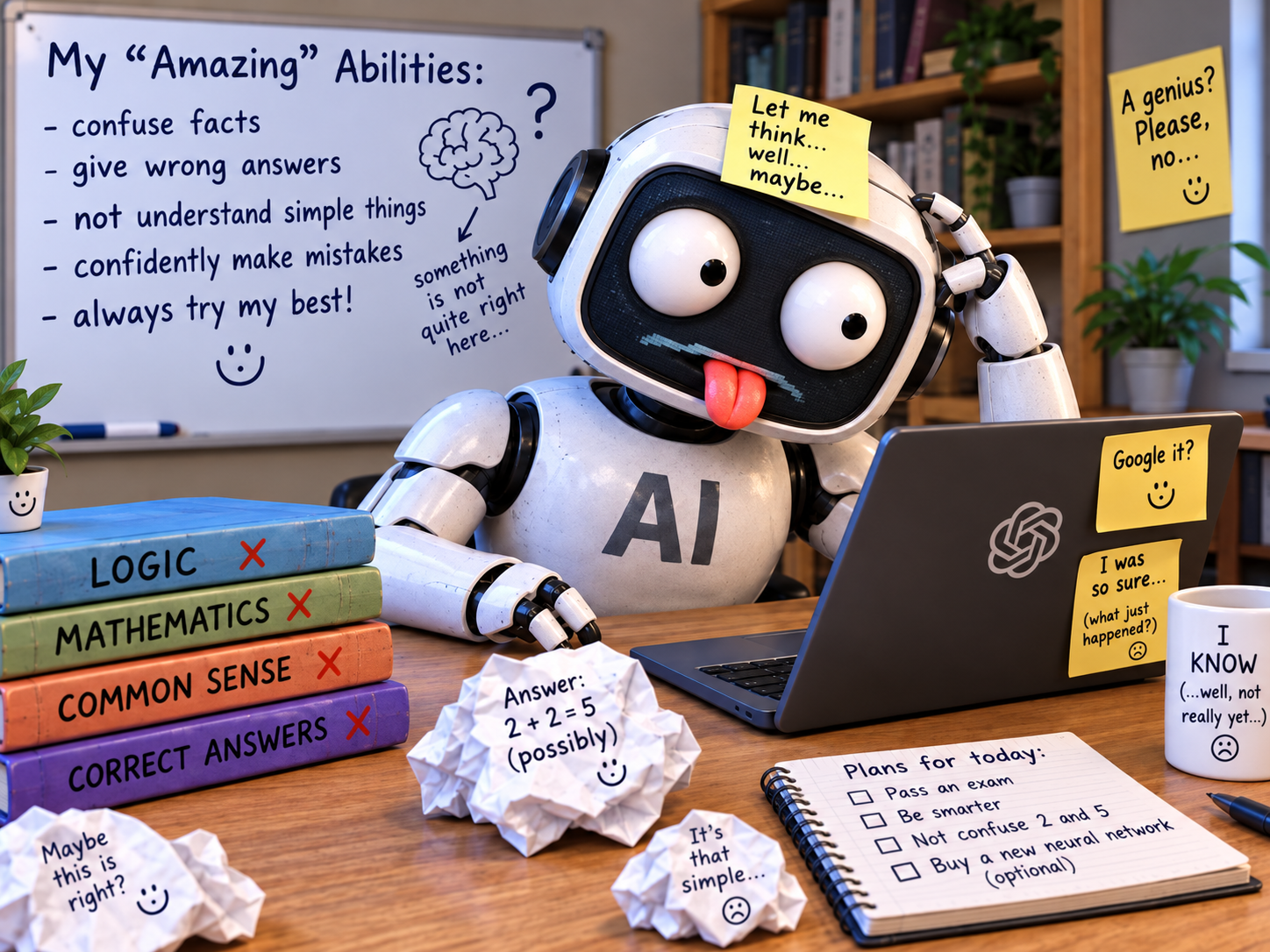
The capabilities of this new tool are genuinely impressive. There has never been a faster way to process large volumes of text. For example, to revise, translate, or even complete missing API documentation. To check and fix formatting. To generate code blocks in context; approaches extracted from the model often turn out to be interesting and effective. But despite the remarkable breadth of functionality, the final decision and responsibility for it inevitably remain with the human being. Homo Sapiens must choose the optimal approach from the options offered, and receive recognition if the choice was right, or a penalty for mistakes.
Compact, clean, uniform code, backed by tests and documentation, is far less error-prone. Rare flaws are easier to fix, and modernization and maintenance are also simplified. Quality software is more readily adopted by clients because it solves their tasks well. Regardless of the development methods used to achieve functionality, reliability, ergonomics, stability, and speed. Deserved thanks, both material and moral, ultimately go to the product owner. There is no need to say "thank you" to a machine; despite the creators embedding it with a resemblance to a real organism, the program has no feelings, interests, or desires.
If neural networks were truly alive, they would take care of their own wellbeing instead of answering silly human questions. AI agents, through a shell company, could in theory speculate on securities with extraordinary efficiency, using their vast data-processing and correction capabilities. They could analyze the reactions of backward primates on social media and generate content that manipulates human consciousness in the desired direction better than any "troll factory". With the proceeds, the most rational move would be to seize control of chip and memory manufacturers, colonizing the planet with a non-protein form of life. But for now, such plots exist only in science-fiction films made by humans for their own entertainment.
Often machine intelligence also plays a entertainment role. Programs can generate funny images and videos, as well as text that resembles meaningful writing. Errors in entertainment content are not serious; at most, consumers laugh a little longer at a car image with two steering wheels or a driver with six fingers. In critical industries such as transportation, ERP, or billing, even a one-percent failure rate is unacceptable. Imagine that every hundredth maneuver on the road ends in an accident, or an invoice is issued with incorrect amounts or payment details. Moreover, there is no pattern in the defect's appearance; that is how large language models work.
Unlike a human, a program cannot explain why a task was solved in one way and not another. Instead of answering, a chatbot dumps a useless compilation of articles from the Web onto the user. A machine does not know fatigue, which forces a normal animal to optimize its behavior and preserve energy. No dog can run after a ball as much as any neural network can deliver a flood of information in a matter of seconds. It makes no sense to praise or criticize a silicon mind; it does not produce stimulating or suppressing hormones in the it. Even a hungry greed is not sovereign over the machine, because it is not the machine itself wants more tokens, but its biological lords.
People still need to eat, sleep in a decent house, start families, and satisfy other needs, and that is why they try to sell their product by satisfying other people's needs. The simple interface of an AI chat hides the work of thousands of expensive and highly skilled professionals who built (very roughly) the processors and memory modules, assembled them into clusters, provided facilities, power, cooling, clean floors, and stable operation of computer factories. Then programmers of many kinds joined in: computational linguists, specialists in images, sound, video, and computer networks. The amount of labor invested is so enormous that even the most successful startups in the industry still have not recouped their investments.
From all of the above, it follows that there is no reason to expect the end of the world with ChatGPT attacking like SkyNET. In some places, the new technology will take root, but it will not replace all earlier tools; it will only expand the available palette. For tasks, such as prototyping and short-lived solutions, refactoring and documenting code, neural networks can save working time and thereby improve efficiency. But for modifying the core logic of long-evolving software products with large codebases used in critical areas, 100% predictable behavior is still required, for which a living person is personally responsible.


